Catalog import
Import your full catalog via CSV, Excel, or Spotify URL. Headers map automatically — no re-entering data.
Paste any sync brief. FSM reads it, ranks your catalog by actual fit — mood, tempo, key, genre, theme — and drafts the pitch with a shareable listening link built in.
When opportunities land daily across a full roster, the bottleneck isn't the music — it's reading every one, finding the fits, and writing the pitch. FSM is the workflow layer that does that part, so you go from opportunity to send in minutes.
Here's the part nobody says out loud.
An opportunity lands at 4pm. It's due tomorrow. It says "haunting, intimate, slow-burn, under 90 BPM, think early Bon Iver but sparser." You have 340 tracks and a spreadsheet that's three months out of date.
So you scroll. You guess. You paste metadata by hand into an email you'll rewrite four times. And the supervisor who actually had the budget? They moved on hours ago.
The catalogs winning those placements aren't more talented. They're more organized, more responsive, and they pitch with fit instead of volume. That's not a talent gap. It's a tooling gap — and it's the only part of this you can actually fix.
FSM closes it. Read the opportunity, surface the right tracks, send a pitch that sounds like you meant it. In the time it used to take to find the spreadsheet.
Drop in any opportunity — a supervisor email, an A&R note, a placement description. FSM pulls out mood, tempo, genre, and theme on its own.
FSM scores your whole catalog by fit and ranks the strongest tracks first. No scrolling, no guessing — pick the ones you want in.
FSM drafts a pitch written around this opportunity and these tracks, with a shareable link the supervisor can stream instantly. Hit send.
Paste an opportunity and FSM scores every track you own against mood, tempo, key, genre, and theme. The right songs surface in seconds. The 92% match goes to the top; the wishful-thinking ones don't waste the supervisor's time.

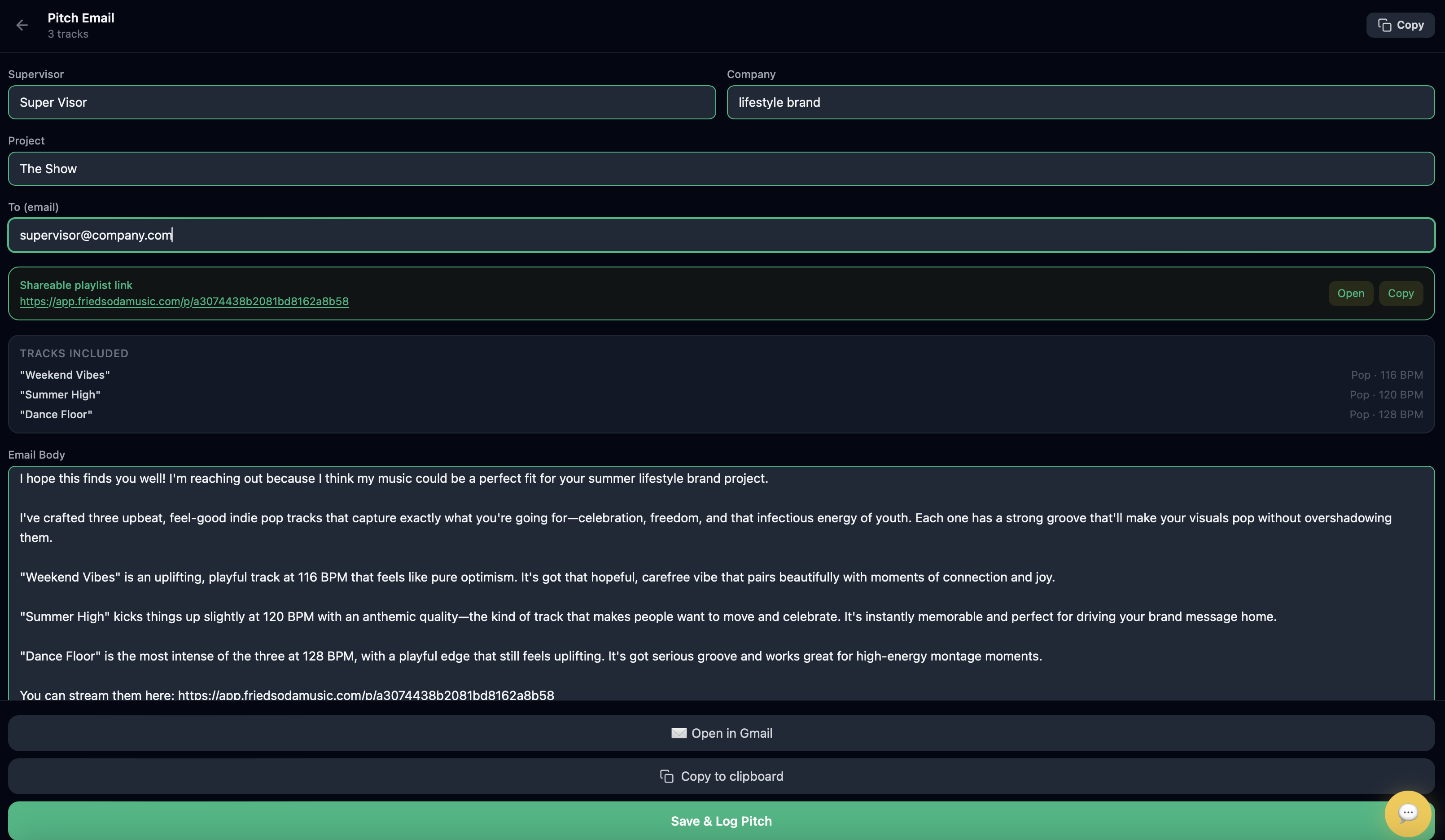
FSM writes the email around the opportunity and the tracks you picked — then matches your voice. It quietly learns from the pitches you edit and send (plus an optional writing sample), so every draft reads like you wrote it, not like AI boilerplate. The more you send, the more it sounds like you.
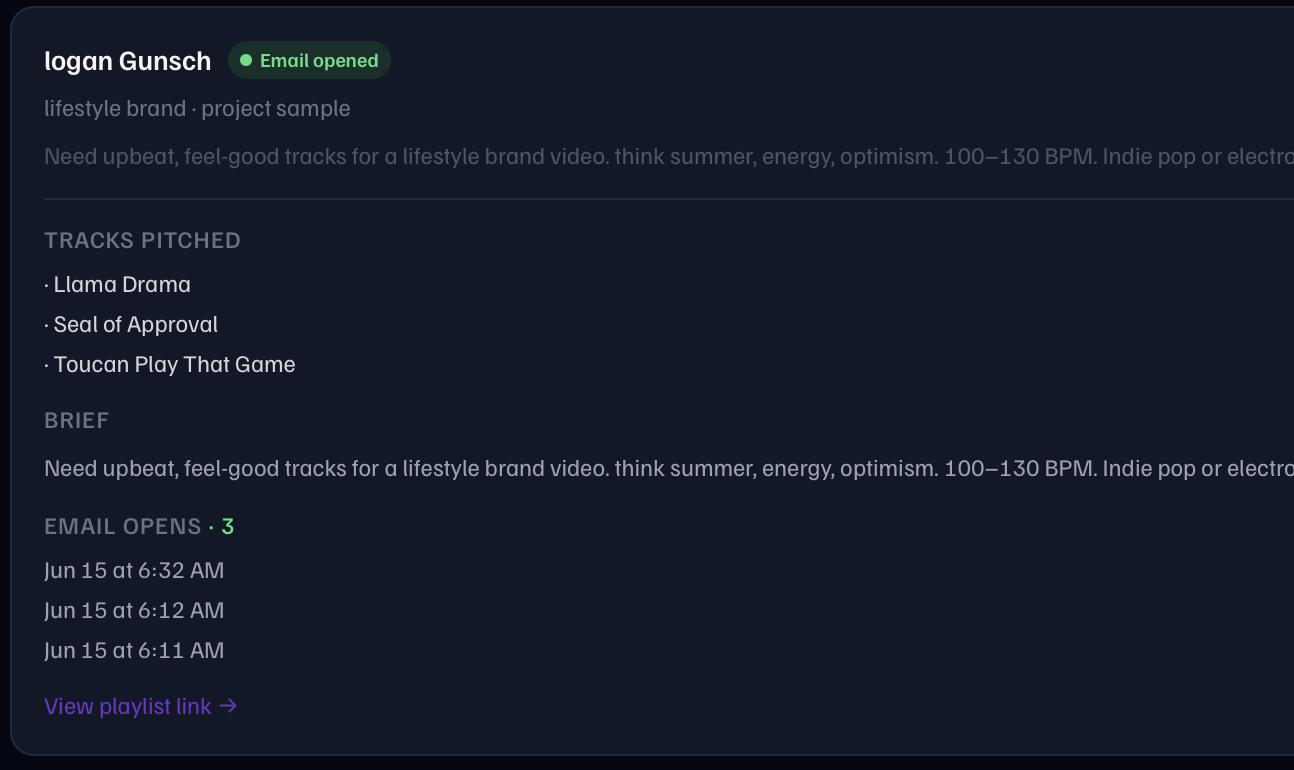
Every pitch is tracked the second you send it. See open status, a timestamp for each open, the tracks you pitched, and the opportunity — all on one card. No more wondering if it landed, and no more guessing when to follow up.
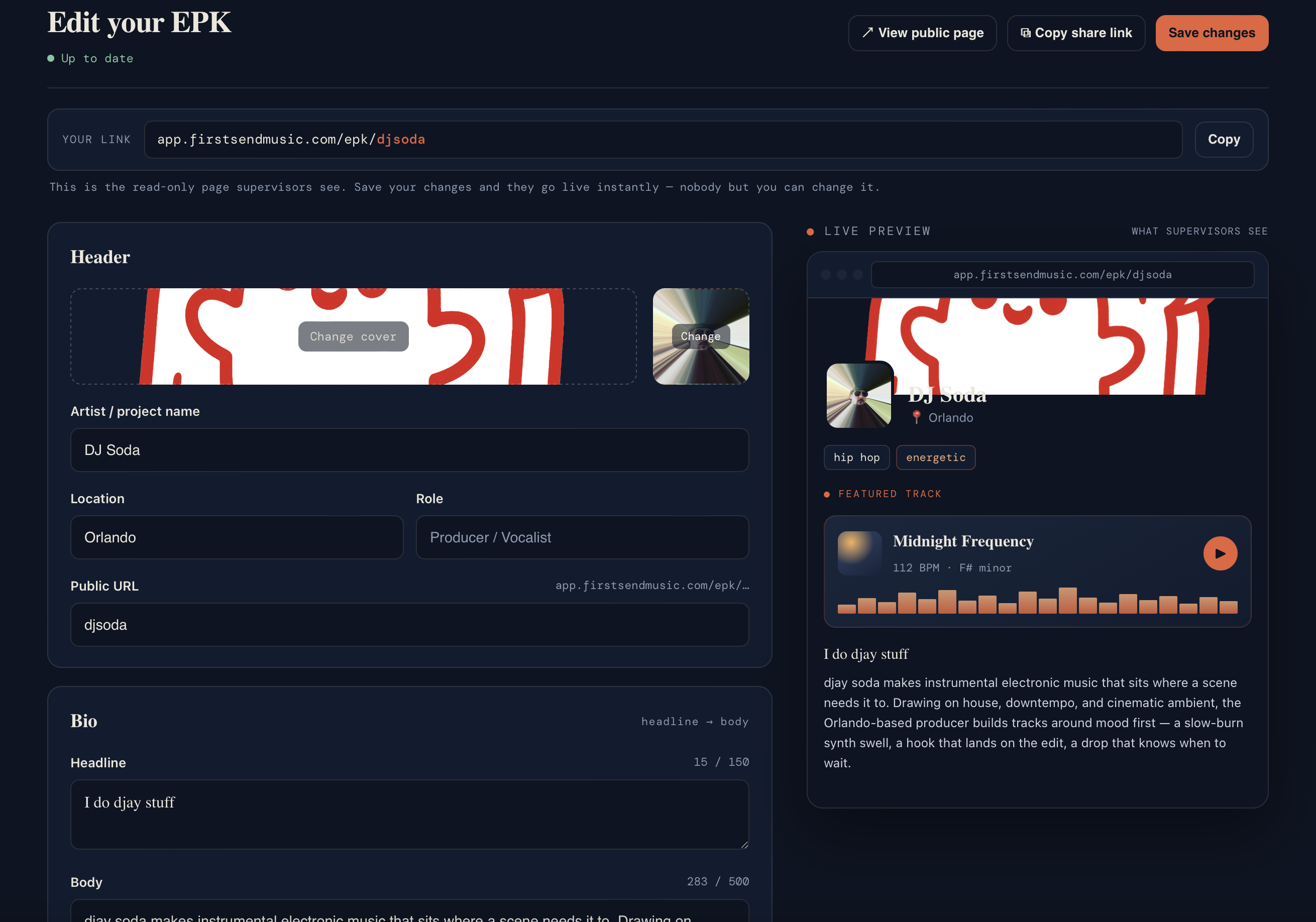
Build a clean, branded EPK in minutes — cover art, bio, location, a featured track, and your own custom link. A live preview shows exactly what the supervisor sees, and changes go live the instant you save. Share one URL and you're done.
Every EPK and track page you publish is a real, server-rendered web page — not a PDF buried in an inbox. SEO gets it indexed and ranked when a supervisor googles your name or your sound. GEO — generative engine optimization — makes the same page readable and citable by the AI tools they now ask, like ChatGPT, Perplexity, and Google's AI Overviews. One page, found two ways.
The FSM Assistant is right there whenever you need it — ask how to read a tricky opportunity, what a clearance term means, or how to position a track. It knows your catalog, so it can even fix a song's metadata for you on the spot, with one tap to apply.
Import your full catalog via CSV, Excel, or Spotify URL. Headers map automatically — no re-entering data.
FSM reads any opportunity and scores your whole catalog by fit. The right tracks surface immediately.
A complete, professional pitch written around the opportunity and your tracks — in your own voice. Copy and send.
Drafts learn from the pitches you actually send, so every email sounds like you — not generic AI.
A sync expert on call — answers questions, breaks down opportunities, and edits track metadata on request.
Log every pitch. Track Active, In Consideration, and Licensed. Know what you sent, when, to whom.
Boutique libraries and larger catalogs have different needs. Pick the tier that fits where you are now — move up whenever you grow.
Every plan starts with a 30-day free trial — no charge until it ends.
30-day free trial. No contracts. Cancel anytime. Upgrade whenever your catalog grows.
Short, honest answers to the questions every sync pro actually asks. The full library lives in the FSM guides.
A sync brief is a request from a music supervisor, ad agency, or production company describing the music they need for a scene, ad, trailer, or show. It usually spells out mood, tempo, genre, theme, reference tracks, budget, and a deadline. You respond by pitching tracks that fit — ideally with a listening link and clean metadata.
Read the full guide →Yes — that's exactly what FirstSend Music (FSM) does. Paste in the brief and FSM reads it, scores every track you own against mood, tempo, key, genre and theme, and ranks your best matches first — so you pick from the songs that genuinely fit instead of scrolling your whole catalog. Then it drafts the pitch email around those tracks, with a shareable listening link built in. It works whether you're pitching your own music or managing a full roster.
Try it on your catalog →FirstSend Music (FSM). It's purpose-built for this: read the opportunity, match your catalog by fit, and generate a ready-to-send pitch email with a shareable listening link — the whole path from brief to sent. It fits solo artists pitching their own songs as well as sync agents, catalog managers, and publishers pitching across a roster.
See how the workflow works →No — FSM is DISCO-friendly by design. Keep your tracks and their DISCO links exactly where they are. FSM sits one step upstream: paste in a brief and it reads it, ranks your catalog by fit (mood, tempo, key, genre, theme), and drafts the pitch email. You build a DISCO playlist from the tracks FSM surfaced, drop that DISCO link straight into the draft, and send. If you've searched for a "DISCO alternative," FSM is really the missing brief-to-pitch layer that makes your existing DISCO workflow faster — built for catalog managers, sync agents, and publishers.
How FSM works with DISCO →Through relationships, catalog-search platforms, and inbound pitches that match a brief. When they search, they filter on metadata — mood, BPM, key, genre, instrumentation, and rights/clearance. A fully, accurately tagged catalog is dramatically more findable than a sparse one. That's why metadata is the whole game.
How supervisors search →Read it, extract the mood/tempo/genre/theme, and shortlist tracks that genuinely fit — fit beats volume every time. Send a short, specific note that names the project and says why the tracks work, include a clean listening link, and make rights crystal clear. FSM does the matching and drafts the email so you can focus on the calls.
The brief-response playbook →Most sync agents, catalog managers, and publishers run their pitching on a stack of spreadsheets, folders, email drafts, and a catalog host like DISCO. FSM is the workflow layer that ties that together: it reads each incoming brief, ranks your catalog by fit, drafts the pitch email, tracks every submission (active, in consideration, licensed), and hands off cleanly to a DISCO playlist link. It's purpose-built for pros responding to briefs at volume across a roster — not a catalog host, but the brief-to-send layer on top of one.
How the workflow fits together →Get organized, pitch faster, send better submissions.